
The Supreme Court collegium has recommended the appointment of Karnataka High Court Chief Justice N V Anjaria, Gauhati High Court Chief Justice Vijay Bishnoi, and Bombay High Court judge Justice A S Chandurkar as judges of the Supreme Court. The five-member collegium, headed by Chief Justice B R Gavai, decided to recommend the names to fill three existing vacancies in the top court. The appointments follow the superannuation of former Chief Justice Sanjiv Khanna, and Justices Abhay S Oka and Hrishikesh Roy. The Supreme Court, which has a sanctioned strength of 34 judges, is currently working with 31 judges.

The move came hours after Justice Khanna had told Singhvi that Kejriwal's petition against his arrest would be heard by a three-judge bench during the day.
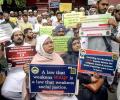
A bench comprising Chief Justice B R Gavai and Justice Augustine George Masih asked senior advocate Kapil Sibal, appearing for those challenging the validity of the law, and Solicitor General Tushar Mehta, representing the Centre, to file their written notes by Monday.

Podcaster Allahbadia's remarks on parents and sex on comedian Samay Raina's YouTube show 'India's Got Latent' triggered a controversy and several FIRs have been lodged against him and others in various parts of the country.

BJP MP Nishikant Dubey has come under fire for his controversial remarks against the Chief Justice of India and now, he has targeted former Chief Election Commissioner S Y Quraishi, calling him a "Muslim commissioner". Dubey's comments come after Quraishi criticized the Waqf (Amendment) Act as a "sinister and evil plan of the government to grab Muslim lands". Dubey's remarks have been met with widespread condemnation, with many calling them inflammatory and divisive.

The Indian government has claimed a significant increase in waqf land following the 2013 amendment to the Waqf Act, asserting that the addition of 20 lakh acres raises concerns about potential "misuse" of the provisions. In an affidavit to the Supreme Court, the Centre highlighted a 116% rise in auqaf area after the amendment and urged the dismissal of petitions challenging the Act's validity.

A bench of Justices Sanjiv Khanna and Sanjay Kumar issued notice to the Chembur Trombay Education Society, which runs the 'N G Acharya and D K Marathe College', and sought its response by November 18.
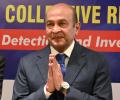
Justice Yashwant Varma, a Delhi High Court judge, has been transferred to his parent Allahabad High Court amid a controversy surrounding the alleged discovery of a large sum of cash at his official residence. The Supreme Court Collegium recommended the transfer, stating it was separate from an in-house probe ordered by the top court into the alleged cash find. The incident occurred following a fire at Justice Varma's residence on Holi night, March 14. Justice Varma has vehemently denied any involvement in the alleged cash discovery, calling it a conspiracy to frame him.

He could have blazed a trail that few Indian judges had. It was a missed opportunity of a lifetime, notes Ramesh Menon.

A bench comprising Justices Sanjiv Khanna, M M Sundresh and Bela M Trivedi will hear the plea of jailed JMM leader at 10.30 am on Friday.

Dubey launched a broadside against the Supreme Court on Saturday, saying Parliament and state assemblies should be shut if the apex court has to make laws.

A voter's right to know is 'far too important' in democracy than the privacy of a donor, Supreme Court judge Justice Sanjiv Khanna said on Thursday as the apex court scrapped the 2018 electoral bond scheme for funding political parties.
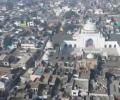
A court in Budaun will decide on December 24 whether to proceed with a hearing in the Jama Masjid Shamsi versus Neelkanth temple case. The dispute arose in 2022 when a Hindu group claimed the temple existed at the mosque site and sought permission to worship. The Supreme Court recently restrained all courts from entertaining and passing any orders on lawsuits seeking surveys of religious places under the Places of Worship (Special Provisions) Act, 1991. The Muslim side argues that the lower court should not proceed with the hearing as it cannot pass any orders, while the Hindu side maintains the Supreme Court order does not stop the hearing. The court will now decide whether to continue the proceedings.
The Mathura Shahi Masjid Eidgah Committee has approached the Supreme Court, requesting the court to prevent the central government from filing a response to a petition challenging the Places of Worship Act's constitutional validity. The committee accuses the BJP-led government of intentionally delaying its response. The court had previously issued a notice to the government in March 2021, but the government has yet to submit its reply despite numerous opportunities. The committee argues that the government's delay is intended to obstruct those opposing the challenge to the Places of Worship Act from filing their own responses. The petition also states that the pleas challenging the law's validity are scheduled for hearing on February 17, and closing the government's right to respond would serve justice. The Supreme Court previously issued a ruling in December 2022 that stopped courts from entertaining new lawsuits or issuing interim or final orders regarding the reclaiming of religious places, particularly mosques and dargahs. The ruling halted proceedings in 18 lawsuits filed by Hindu groups seeking surveys to confirm the original religious character of 10 mosques, including the Gyanvapi Masjid in Varanasi, the Shahi Idgah Masjid in Mathura, and the Shahi Jama Masjid in Sambhal. This decision was made in response to six petitions, including one filed by lawyer Ashwini Upadhyay, challenging various provisions of the Places of Worship Act. The 1991 law prohibits the conversion of places of worship and guarantees the preservation of their existing religious character as it stood on August 15, 1947. Notably, the dispute regarding the Ram Janmabhoomi-Babri Masjid in Ayodhya was excluded from this law. There are also several cross-petitions advocating for a strict enforcement of the 1991 law to uphold communal harmony and maintain the current status of mosques that Hindu groups seek to reclaim, claiming they were temples before being destroyed by invaders.

The Chief Justice of India (CJI) Sanjiv Khanna has assured bar leaders that he will consider their demand for withdrawal of the collegium's recommendation to transfer Delhi High Court's Justice Yashwant Varma. The decision came after representatives of six bar associations of different high courts met with the CJI and other collegium members. The bar associations are protesting the proposed repatriation of Justice Varma to his parent high court, alleging that the evidence in a fire incident at his residence was tampered with. The bar associations have also raised concerns about the non-registration of an FIR in the incident.
"Liberty is granted to newly-added respondents (states) to file a response within 15 days from the date of service, and rejoinder if any be filed after 15 days. The interim order to continue and will equally apply to the cases mentioned in the amended writ petition. We direct no further cases be registered without the permission of this court," the bench's order said.
The Supreme Court on Monday said the pleas challenging the Waqf (Amendment) Act's constitutional validity will now be taken up by a bench headed by Chief Justice of India-designate Justice B R Gavai on May 15 as the incumbent CJI will be demitting office on May 13.

'It is a crisis of BJP's own doing. This is an in-house fire.'
The Supreme Court on Monday said the trial of the Manipur ethnic violence cases, probed by the Central Bureau of Investigation, would be conducted in Guwahati, Assam, where it was transferred to earlier.
The collegium, also comprising Justices Sanjay Kishan Kaul, Sanjiv Khanna, B R Gavai and Surya Kant, recommended the names of Delhi high court Chief Justice Satish Chandra Sharma, Rajasthan high court Chief Justice Augustine George Masih and Gauhati high court Chief Justice Sandeep Mehta as top court judges.

Union Parliamentary Affairs Minister Kiren Rijiju on Wednesday underlined the government's resolve to take all political parties on board in moving an impeachment motion against Justice Yashwant Varma, saying corruption in the judiciary cannot be approached through a 'political prism'.

The State Bank of India, which unsuccessfully sought extension of time till June 30 to disclose the details of electoral bonds, on Monday faced searching questions from the Supreme Court which wanted to know about the steps taken to comply with the directions it had issued while scrapping the controversial scheme of anonymous political funding on February 15.
The Act prohibits conversion of any place of worship and provides for the maintenance of the religious character of any place of worship as it existed on August 15, 1947.

A Supreme Court lawyer has written to the Attorney General seeking consent to initiate contempt proceedings against BJP MP Nishikant Dubey for his "grossly scandalous" remarks against the court. Dubey had criticized the Supreme Court and Chief Justice of India Sanjiv Khanna following the Centre's assurance that it would not implement some of the contentious provisions of the Waqf (Amendment) Act. The BJP has distanced itself from Dubey's comments, calling them his personal views.

In a jolt to telecom firms, the Supreme Court has dismissed a batch of pleas filed by companies, including Vodafone Idea and Bharti Airtel, seeking correction of alleged errors in the Adjusted Gross Revenue. A bench comprising Chief Justice D Y Chandrachud and Justices Sanjiv Khanna and B R Gavai also rejected the plea of telcos seeking to list the curative petitions for open court hearing.
The Collegium had proposed Justice Singh's transfer on August 3 for "better administration of justice".

Former Chief Justice of India D Y Chandrachud addresses the controversy surrounding his continued stay at his official residence after retirement, citing his daughters' medical needs and ongoing efforts to move to suitable accommodation.
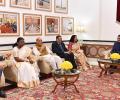
The views came in the wake of Vice President Jagdeep Dhankhar wondering on Friday that how could the CJI, even by "statutory prescription", get involved in executive appointments such as that of Central Bureau of Investigation director, and said it was time to "revisit" such norms.
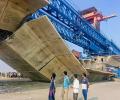
The Supreme Court of India has transferred a Public Interest Litigation (PIL) concerning the safety and longevity of bridges in Bihar to the Patna High Court. The court expressed concern over the state government's handling of bridge collapses, noting that officials were suspended after incidents but reinstated after the public outcry subsided. The court also criticized the state's voluminous response to the PIL, which lacked explanations for the collapses. The Patna High Court will now monitor the state's efforts to ensure structural and safety audits of bridges in Bihar.
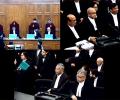
A five-judge constitution bench headed by Chief Justice D Y Chandrachud held that the 2018 scheme was 'violative' of the constitutional right to freedom of speech and expression and right to information.
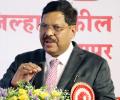
Chief Justice of India Bhushan Ramkrishna Gavai spoke about Dr. B R Ambedkar's views on the supremacy of the Constitution and the need for an independent judiciary.
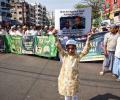
The matter would be heard by Chief Justice B R Gavai and Justice Augustine George Masih.
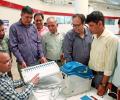
A bench of justices B R Gavai and Sandeep Mehta told the petitioner's counsel that a coordinate bench of the apex court had last week delivered its verdict on the issue.

The Supreme Court on Tuesday agreed to hear next week a plea which flagged Bharatiya Janata Party MP Nishikant Dubey's recent criticism of the apex court and Chief Justice of India Sanjiv Khanna, and sought removal of derogatory videos from social media platforms.

The Supreme Court on Friday said the plea seeking a policy for verification of electronic voting machines should go before the same bench that delivered a verdict in April rejecting the demand for bringing back the old paper ballots.
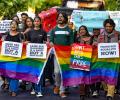
A five-judge bench of the Supreme Court will consider review pleas challenging the October 2023 verdict that declined legal sanction to same-sex marriage. The review pleas will be heard in chambers on January 9, with Justice P S Narasimha being the only member of the original bench that delivered the verdict.
In a viral video of the court proceedings, the judge was seen reprimanding a woman lawyer on Thursday and reportedly made some objectionable comments.

A three-judge bench headed by Justice A M Khanwilkar, by 2:1 majority, held that the grant of environmental clearance and the notification for change in land use for the project was valid.
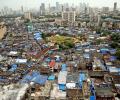
The Supreme Court of India has refused to halt the redevelopment project of Dharavi in Mumbai, allowing the Adani Group to proceed with their project. The court rejected a plea from Seclink Technologies Corporation, the original highest bidder for the project in 2018, which challenged the tender process and the award to Adani Properties Pvt Ltd in 2022. The court directed Adani Properties to make payments through a single bank account and ordered Seclink Technologies to file an affidavit detailing their increased offer for the project. The project work has already commenced, with constructions underway and 2,000 people employed on the site.

The Supreme Court of India has extended its stay on a court-monitored survey of the Shahi Idgah Mosque complex in Mathura, which is located adjacent to the Krishna Janmabhoomi temple. The court deferred the hearing on a plea against the survey to April 1, while the interim order staying the survey will continue to operate. The Hindu side claims that the mosque complex holds signs of a temple that once existed at the site, while the Muslim side contends that the lawsuits filed by the Hindu litigants violate the Places of Worship (Special Provisions) Act of 1991.
 © 2026 Rediff.com - Advertise with us - Disclaimer - Privacy Policy - Sitemap - Feedback - About us - Terms of use - Grievances